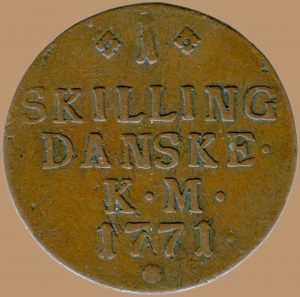
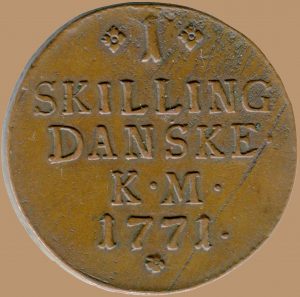
Identify your coin
So you have a 1771 skilling coin at hand and want to find out which variation you have acquired? Here are some simple guidelines to help you identify it:
1. Do I have an Altona, Copenhagen or Kongsberg coin?
Many people find it difficult to distinguish between the different variations and mints. Even coin dealers sometimes struggle with this. However, there are numerous subtle features that can reveal the true identity of a 1771 skilling coin. We have therefore divided the various dies into 77 different subcategories based on relevant differences.
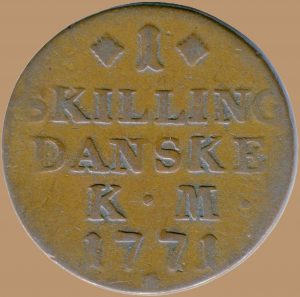
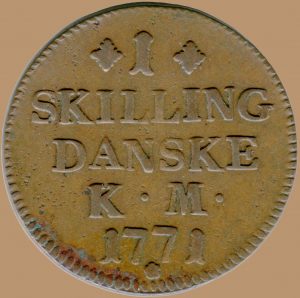
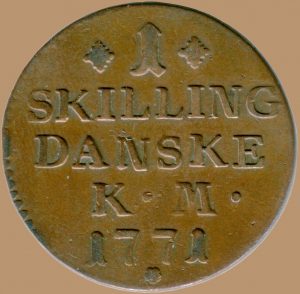
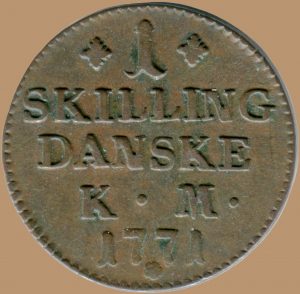
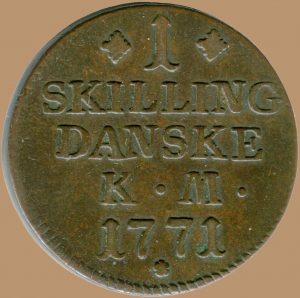
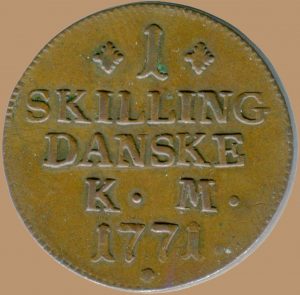
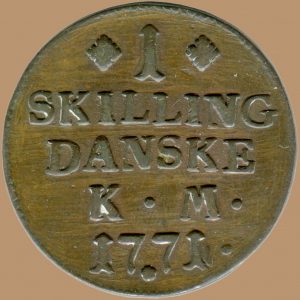
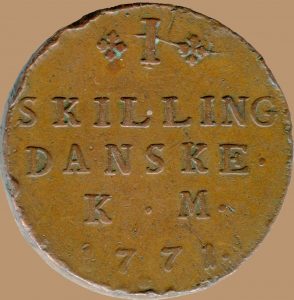
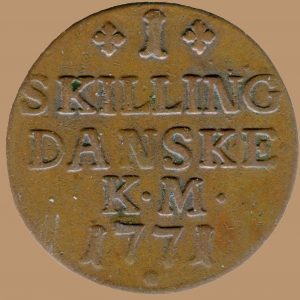
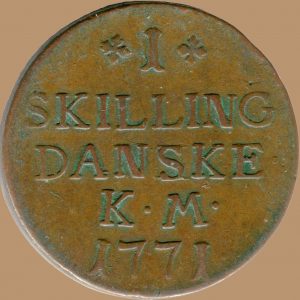
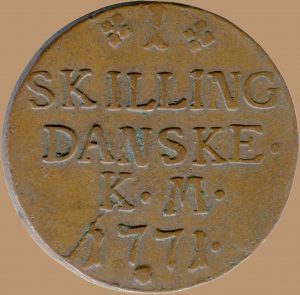
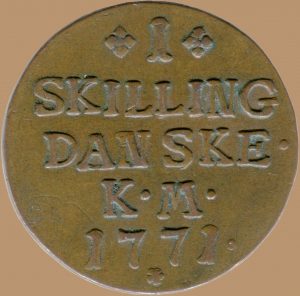
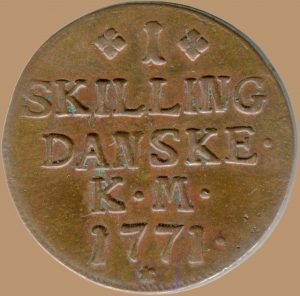
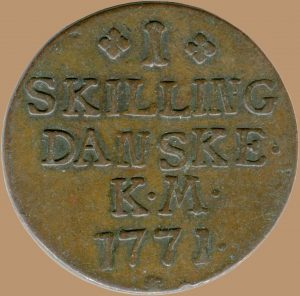
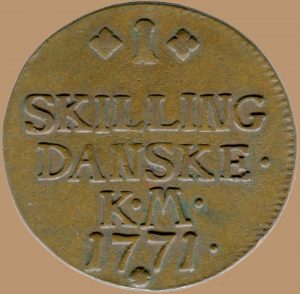
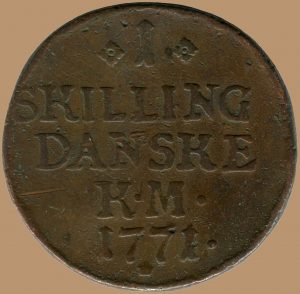
The easiest way to determine the mint of origin is to look at the rosettes on either side of the upper “1” on the reverse. In the table below, we have included scans of typical, moderately worn rosettes found on coins from the three mints.
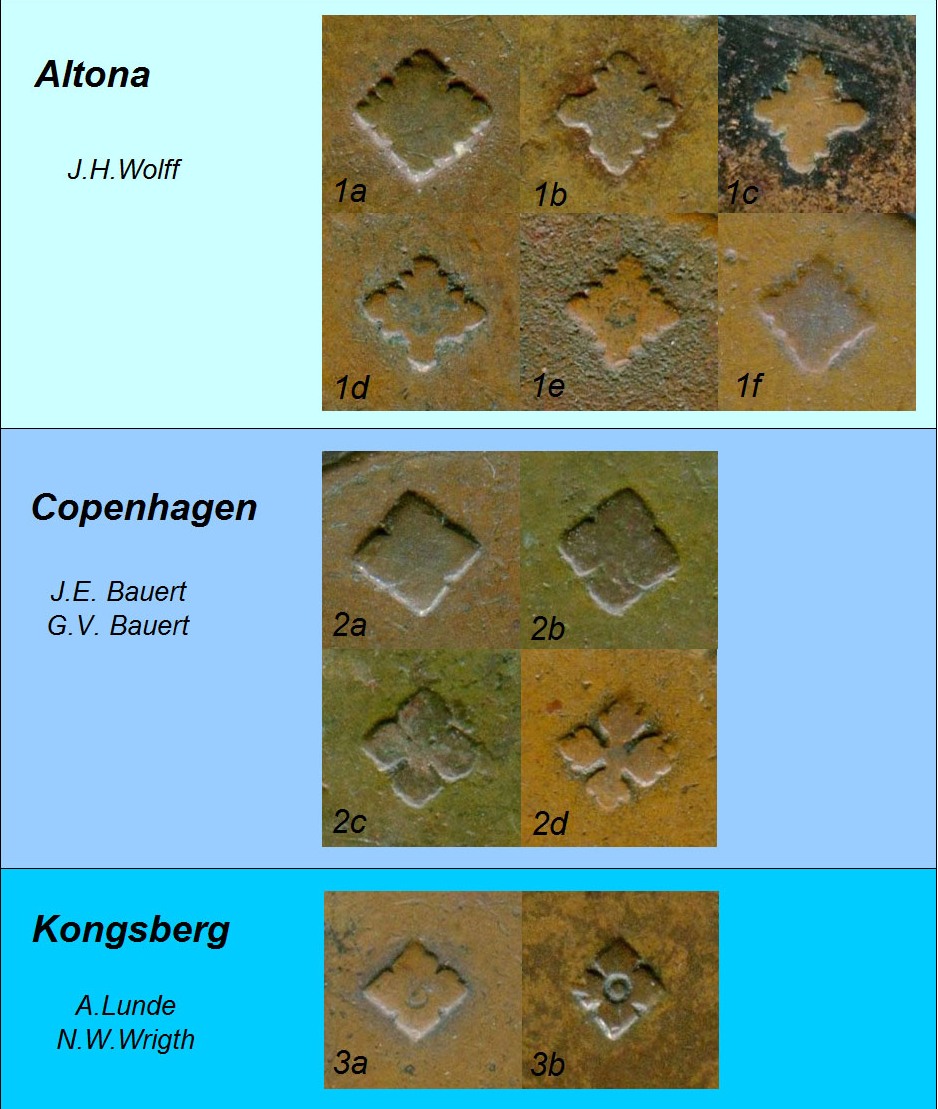
While we readily admit that the differences between 1a, 2a and 3a can be difficult to spot at first glance, they become much easier to recognize once you know what to look for. The three rhombus-shaped rosettes differ in their underlying shape and size. The Altona rosettes give more of a “postage stamp” impression, while shape 2a is derived from 2d and shape 3a from 3b.
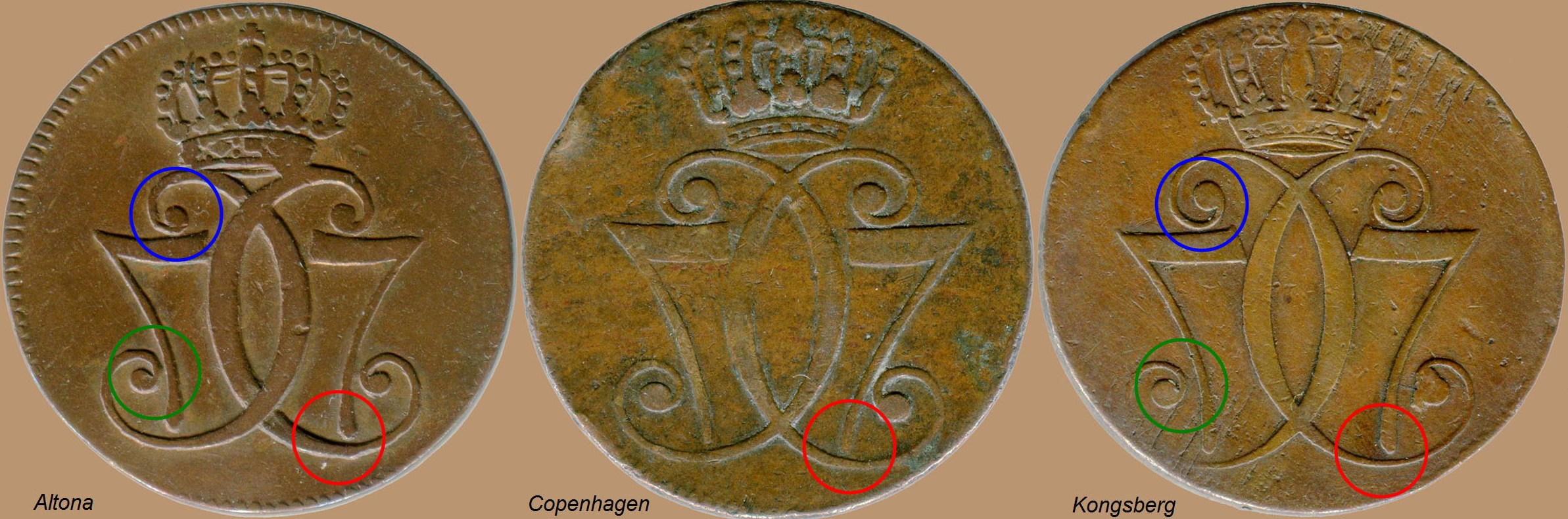
If you are still unsure about the mint of origin after studying the upper rosettes, turn the coin over and look at the shape of the two “7”s. Below, we have illustrated the noticeable difference between the Copenhagen and Altona “7”s. Inside the red circle, you can see that the Altona “7” has a curved ending, while the Copenhagen “7” is much straighter.
It should be noted that there is greater variation in the Copenhagen obverses because the monograms were made individually by hand for each die, whereas the Altona obverses have a fixed monogram. To complicate matters further, even if you have identified the mint of origin of your obverse, there is about a 2% chance that the reverse comes from a different mint because dies from different mints were occasionally paired. You can read more about these pairings under “Type 5” on the Altona page.
The Kongsberg “7” can be quite similar to the Altona “7” to the untrained eye, so this method is not always sufficient. It can therefore be useful to examine the space between the curl of the “C”s and the lower part of the “7”s, shown inside the green circle. This space is smaller on the Altona variations. In addition, most Kongsberg obverses have larger, higher-positioned “C” curls, marked with blue rings, than the lower and smaller Altona curls. There are, however, a few exceptions to this rule.
2. Which variation category do I have?
Once you have established the mint of origin, the next step is to narrow down the search and identify the variation category. On the Altona page, the Copenhagen page and the Kongsberg page, we provide a detailed overview of the chronological development and the characteristics that distinguish one variation category from another.
Some of the differences can be quite subtle, so a good magnifying glass—or preferably a camera or scanner—can help enlarge the coin image and make the details easier to discern. Finally, you will need to browse the relevant gallery page to identify the exact variation you have found.
Below, we have listed reverses from the 18 main categories to make the search a little easier: